
We often participate in annual inventory and asset verification processes as part of our intercompany audit cycles, and if you’ve spent any time in an operations or logistics role, you know the dreaded feeling of annual or quarterly stocktakes.
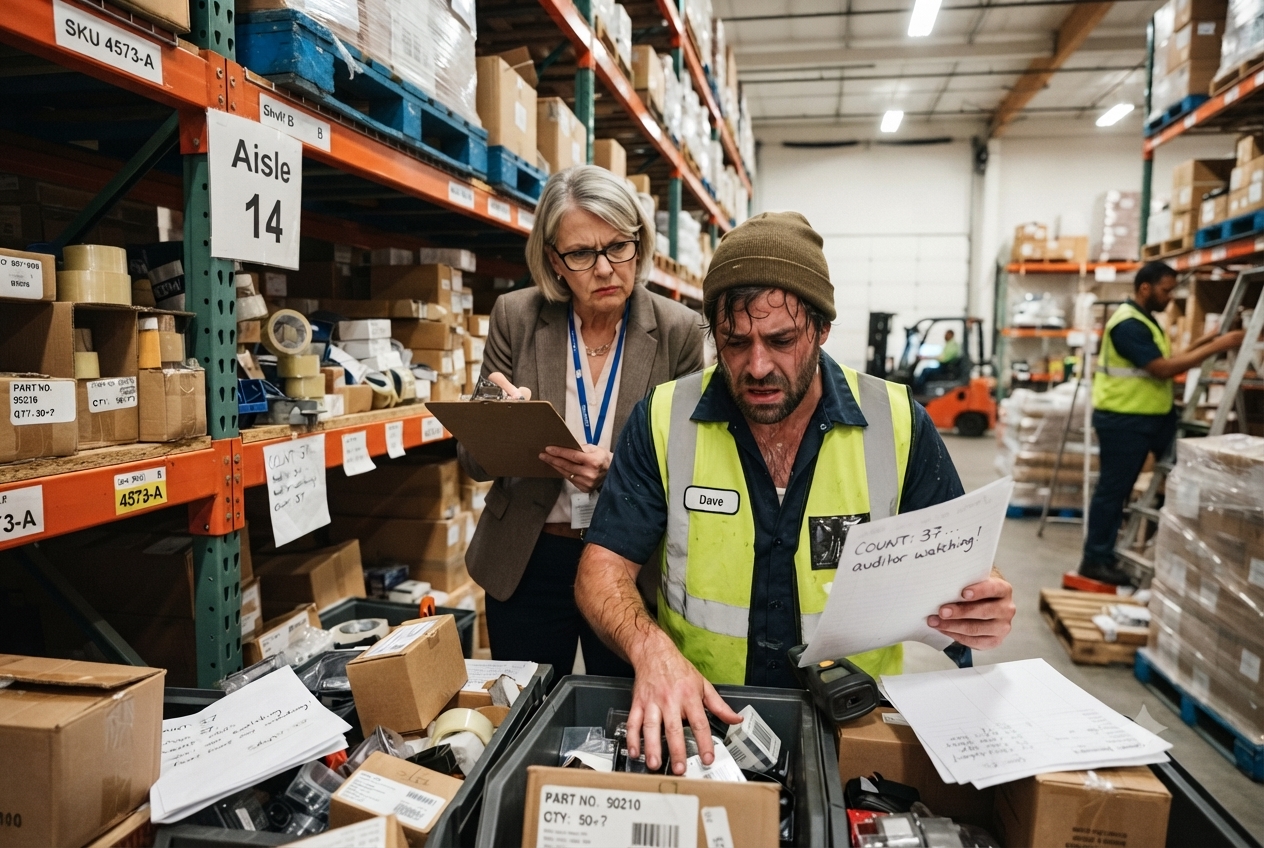
As an accounting officer, I have witnessed stocktakes that felt more like high-stakes hostage negotiations than business reconciliations. I have seen perfectly calm logistics managers turn into frantic performers, weeping over stock discrepancies or undocumented asset movements. I’ve seen departments turn on each other like siblings fighting over a toy, all because the physical counts didn't match the digital ghost in the system.
While one can’t help but see a tiny bit of humour play out, it’s also heartbreaking. Many employees fear for their jobs, and they know all too well that incorrect numbers mean problems. But here is the professional truth I learned from the other side of the clipboard: The stock and asset audit is a mirror, not a weapon. If you are terrified of the auditor, you are actually terrified of your own housekeeping.
If your inventory is a chaotic jumble, you are rightfully stressed. But if you embrace "The Art of Perpetual Preparedness," the annual stocktake ceases to be a traumatic event and becomes, dare I say, a mundane formality.
Here is how to get your team to go from being panic-stricken to becoming process-driven.
1. Declutter the Physical and the Digital
Before the auditors even set foot on your premises, your warehouse should already look like a sterile laboratory: clean, organised and neat. If your aisles are cluttered with "orphan" stock items without a home or a barcode, you are just begging for a variance report. Ensure every item has a location, and every location has a tag. If your digital system doesn't match the physical reality on Tuesday, it certainly won’t match it on Friday during the audit.
2. The "Pre-Count" is Not Optional
Never, ever let the audit be the first time you count your stock. Run internal "mini-counts" throughout the year. Assign specific zones to specific staff members every month. By the time the external auditors arrive, your team should have counted their way into confidence and be prepared. When staff members know exactly where every bolt is, they stop shouting at each other and start acting with confidence.
3. Documentation: The Auditor’s Love Language
It’s never personal for the auditor, but uncertainty spoils the mood! When a variance occurs, and it will, do not scramble to find excuses. Have your documentation ready. Why is the stock short? Was there a returns processing lag? Was it a system error? Were there damaged goods write-offs that hadn't been captured yet? Was stock issued during a night shift if it’s a production line? A well-documented file explaining why an error occurred is far more valuable than a desperate attempt to hide the error itself.
4. Humanize the Process
The stress of the stocktake stems from the fear of the "gotcha!" moment. As a manager, shift the narrative. Explain that these checks are there to protect the company's integrity and, by extension, their jobs. When the team understands that the audit is about verifying the health of the business rather than catching someone in a lie, the defensive posture disappears. Be open to suggestions from your teams on how to get a better handle on assets and stock; they might just surprise you with their ideas.
The Final Takeaway
The best stocktakes are the ones where the managers have nothing to hide, and everything is under control. Being greeted with a smile, having an introductory cup of coffee (yes, shockingly auditors do enjoy coffee too!), meeting a relaxed group of people and being handed a perfectly organized spreadsheet sets the right tone from the start.
Create internal systems that make good housekeeping easy. Appoint specific people and hold them accountable for their areas of responsibility. Use technology and processes that are thorough but easy to execute. A digitised stock control system is far easier to manage than a bunch of files with loosely filed papers with missing signatures. Asset and stock management software exists - use it!
Don’t wait for the audit confirmation email to arrive before you tidy your house. Keep your records clean, your warehouse organized, and your communication transparent. You’ll find that when you respect the process, the process, in turn, will stop being the boogeyman and start being just another day at the office.
And who knows, you may very well find that pallet of stock accidentally placed behind a container you thought you lost three years ago. Now isn’t that just a reason to celebrate!
Contact us at +27 82 561 7024 or myrtleo@mbasa.org for a free, no-obligation consultation, and let’s ensure you are on the right track from day one.
As an accounting officer, I have witnessed stocktakes that felt more like high-stakes hostage negotiations than business reconciliations. I have seen perfectly calm logistics managers turn into frantic performers, weeping over stock discrepancies or undocumented asset movements. I’ve seen departments turn on each other like siblings fighting over a toy, all because the physical counts didn't match the digital ghost in the system.
While one can’t help but see a tiny bit of humour play out, it’s also heartbreaking. Many employees fear for their jobs, and they know all too well that incorrect numbers mean problems. But here is the professional truth I learned from the other side of the clipboard: The stock and asset audit is a mirror, not a weapon. If you are terrified of the auditor, you are actually terrified of your own housekeeping.
If your inventory is a chaotic jumble, you are rightfully stressed. But if you embrace "The Art of Perpetual Preparedness," the annual stocktake ceases to be a traumatic event and becomes, dare I say, a mundane formality.
Here is how to get your team to go from being panic-stricken to becoming process-driven.
1. Declutter the Physical and the Digital
Before the auditors even set foot on your premises, your warehouse should already look like a sterile laboratory: clean, organised and neat. If your aisles are cluttered with "orphan" stock items without a home or a barcode, you are just begging for a variance report. Ensure every item has a location, and every location has a tag. If your digital system doesn't match the physical reality on Tuesday, it certainly won’t match it on Friday during the audit.
2. The "Pre-Count" is Not Optional
Never, ever let the audit be the first time you count your stock. Run internal "mini-counts" throughout the year. Assign specific zones to specific staff members every month. By the time the external auditors arrive, your team should have counted their way into confidence and be prepared. When staff members know exactly where every bolt is, they stop shouting at each other and start acting with confidence.
3. Documentation: The Auditor’s Love Language
It’s never personal for the auditor, but uncertainty spoils the mood! When a variance occurs, and it will, do not scramble to find excuses. Have your documentation ready. Why is the stock short? Was there a returns processing lag? Was it a system error? Were there damaged goods write-offs that hadn't been captured yet? Was stock issued during a night shift if it’s a production line? A well-documented file explaining why an error occurred is far more valuable than a desperate attempt to hide the error itself.
4. Humanize the Process
The stress of the stocktake stems from the fear of the "gotcha!" moment. As a manager, shift the narrative. Explain that these checks are there to protect the company's integrity and, by extension, their jobs. When the team understands that the audit is about verifying the health of the business rather than catching someone in a lie, the defensive posture disappears. Be open to suggestions from your teams on how to get a better handle on assets and stock; they might just surprise you with their ideas.
The Final Takeaway
The best stocktakes are the ones where the managers have nothing to hide, and everything is under control. Being greeted with a smile, having an introductory cup of coffee (yes, shockingly auditors do enjoy coffee too!), meeting a relaxed group of people and being handed a perfectly organized spreadsheet sets the right tone from the start.
Create internal systems that make good housekeeping easy. Appoint specific people and hold them accountable for their areas of responsibility. Use technology and processes that are thorough but easy to execute. A digitised stock control system is far easier to manage than a bunch of files with loosely filed papers with missing signatures. Asset and stock management software exists - use it!
Don’t wait for the audit confirmation email to arrive before you tidy your house. Keep your records clean, your warehouse organized, and your communication transparent. You’ll find that when you respect the process, the process, in turn, will stop being the boogeyman and start being just another day at the office.
And who knows, you may very well find that pallet of stock accidentally placed behind a container you thought you lost three years ago. Now isn’t that just a reason to celebrate!
Contact us at +27 82 561 7024 or myrtleo@mbasa.org for a free, no-obligation consultation, and let’s ensure you are on the right track from day one.
CONTACT US
Please contact us for an obligation free consultation. Our team works remotely and we are available for on-line or local in person meetings.
082 561 7024
Mon to Fri 7am to 4pm
Mon to Fri 7am to 4pm
myrtleo@mbasa.org